-
Children & Young People
-
Adults
-
- Understanding depression
- Is It Depression or Am I Just Feeling Low?
- High-Functioning Depression
- Depression and Motivation
- Depression and Self-Esteem
- Depression and Relationships
- Depression and Sleep
- Depression and Anxiety
- Depression and Loneliness
- Depression and Guilt
- Depression and Emotional Numbness
-
Digital Downloads
Depression and Self-Esteem
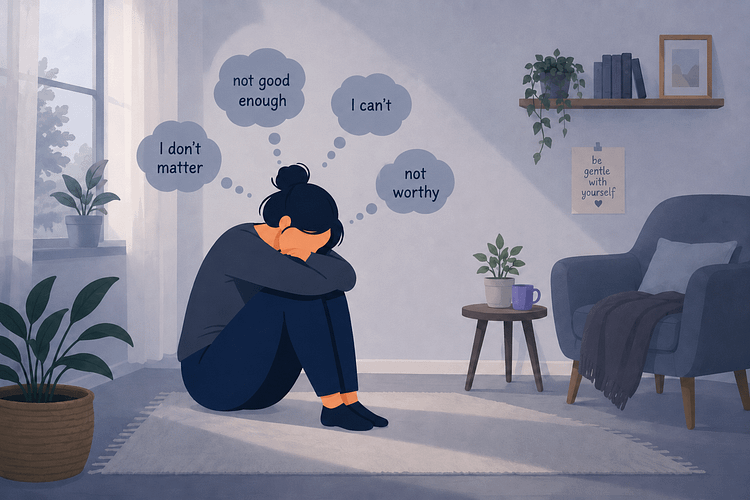
Depression and self-esteem are often closely connected. Many people living with depression describe becoming increasingly critical of themselves, doubting their abilities, or feeling as though they are not good enough. Over time, these thoughts can affect confidence, relationships, and the way a person views themselves.
Understanding self-esteem and depression can help explain why depression often changes not only how we feel, but also how we think about who we are. Recognising these patterns can be an important step towards responding with greater compassion rather than self-criticism.
What Is Self-Esteem?
Self-esteem is the way we think and feel about ourselves.
It influences how we:
- view our abilities
- respond to mistakes
- manage setbacks
- build relationships
- accept compliments
- recognise our strengths
- cope with challenges
Healthy self-esteem does not mean believing we are perfect. Instead, it involves recognising both our strengths and our difficulties whilst treating ourselves with kindness and understanding.
How Depression Affects Confidence
How depression affects confidence can look different from one person to another.
Some people begin to:
- doubt their abilities
- lose confidence in making decisions
- withdraw from social situations
- stop trying new things
- question their worth
- avoid opportunities
- compare themselves to others
Activities that once felt manageable may begin to feel overwhelming, reinforcing the belief that they are no longer capable.
Depression and Self-Worth
Depression and self-worth are often linked through the negative beliefs people develop about themselves.
Someone experiencing depression may find themselves thinking:
- “I’m not good enough.”
- “I’m a burden.”
- “I always get things wrong.”
- “Nothing I do is enough.”
- “People would be better off without me.”
These thoughts can feel convincing, even though they are not objective facts.
Depression often changes the way we interpret ourselves and our experiences, making it difficult to recognise personal strengths or achievements.
Low Self-Esteem and Depression
Low self-esteem and depression can influence one another.
Low confidence may increase vulnerability to depression, whilst depression can make existing self-esteem difficulties feel much worse.
People may begin to:
- dismiss positive feedback
- focus on mistakes
- ignore achievements
- expect failure
- believe they are letting others down
- become increasingly self-critical
Over time, this can create a cycle where low mood and negative self-beliefs reinforce one another.
Where Do These Beliefs Come From?
Our sense of self develops over many years.
Experiences such as:
- criticism
- bullying
- trauma
- difficult relationships
- unrealistic expectations
- repeated setbacks
- childhood experiences
can all influence the beliefs we hold about ourselves.
Depression often strengthens these existing beliefs, making them feel more convincing and harder to challenge.
Rebuilding Self-Esteem
Rebuilding confidence rarely happens overnight.
Many people find it helpful to:
- notice self-critical thoughts
- speak to themselves with greater kindness
- acknowledge small achievements
- recognise personal strengths
- reduce comparisons with others
- celebrate progress rather than perfection
Learning to respond with compassion instead of criticism can gradually help change the relationship we have with ourselves.
You Are More Than Your Depression
One of the most difficult aspects of depression is that it can make people believe their struggles define who they are.
Depression is something a person experiences, not who they are.
Remembering this distinction can help people begin separating their identity from the thoughts and feelings depression creates.
Even during difficult periods, your worth remains unchanged.
How Counselling Can Help
Counselling provides a supportive space to explore the relationship between depression, confidence, and self-worth.
Together, it is possible to understand where self-critical beliefs may have developed, recognise patterns that keep them going, and begin developing a more balanced and compassionate view of yourself.
Rather than focusing on becoming more confident overnight, counselling encourages a gradual process of self-understanding, emotional healing, and recognising your value beyond depression.
FAQ Section
Can depression affect self-esteem?
Yes. Depression often affects confidence and self-worth, making people more likely to doubt themselves or focus on perceived failures.
Why do I feel like I’m not good enough?
Depression can influence the way we think about ourselves, making self-critical thoughts feel convincing even when they are not accurate reflections of reality.
Can low self-esteem lead to depression?
Low self-esteem and depression can influence one another. Long-standing self-critical beliefs may increase vulnerability to depression, whilst depression can make those beliefs feel stronger.
Can self-esteem improve during recovery?
Yes. As people begin understanding themselves more compassionately, confidence and self-worth often improve over time.
Can counselling help with self-esteem and depression?
Counselling can help you explore self-critical beliefs, understand where they may have come from, and develop a healthier relationship with yourself.
Further Reading
For further information about self-esteem and mental wellbeing, Mind provides practical information and supportive resources.
Looking for Support?
If this resonates, or you are looking for support for your child, young person, or yourself, feel free to get in touch.