-
Children & Young People
-
Adults
-
- Understanding depression
- Is It Depression or Am I Just Feeling Low?
- High-Functioning Depression
- Depression and Motivation
- Depression and Self-Esteem
- Depression and Relationships
- Depression and Sleep
- Depression and Anxiety
- Depression and Loneliness
- Depression and Guilt
- Depression and Emotional Numbness
-
Digital Downloads
Depression and Loneliness
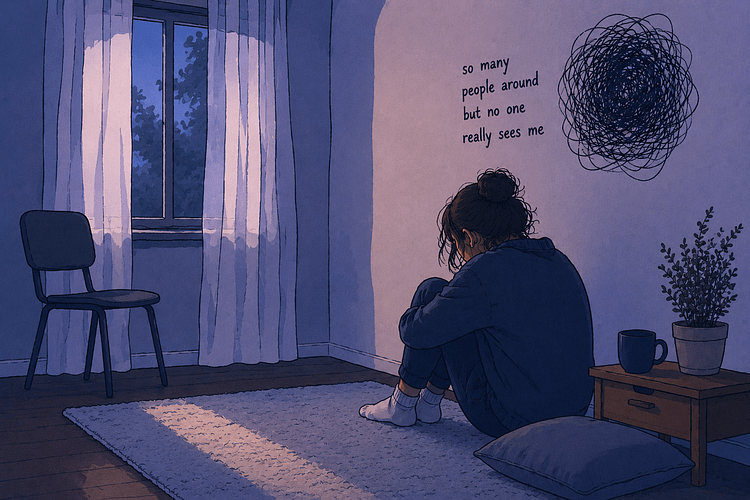
Depression and loneliness often influence one another in complex ways. Whilst loneliness can contribute to depression, depression can also make people withdraw from others, leaving them feeling increasingly isolated over time.
Feeling alone with depression does not always mean being physically alone. Many people describe feeling disconnected even when surrounded by family, friends, or colleagues. Understanding the relationship between loneliness and depression can help explain why connection often feels more difficult during periods of low mood.
Everyone experiences loneliness differently, and there is no single explanation for why it develops.
Loneliness and Depression
Loneliness and depression can become closely linked.
Someone experiencing depression may begin to:
- withdraw from social situations
- cancel plans
- stop replying to messages
- avoid asking for help
- feel disconnected from others
- believe they are a burden
Whilst these behaviours may offer short-term relief, they can sometimes increase feelings of loneliness over time.
Feeling Alone with Depression
Feeling alone with depression is a common experience.
Many people describe feeling as though:
- nobody understands them
- they cannot explain how they feel
- they are different from everyone else
- asking for support would burden others
- they have to cope alone
These thoughts can make reaching out feel incredibly difficult, even when support is available.
Social Isolation and Depression
Social isolation and depression often reinforce one another.
Depression may reduce motivation to see friends or participate in activities that once felt enjoyable.
As social contact decreases, opportunities for connection, encouragement, and support may also become less frequent.
Over time, this can create a cycle where loneliness deepens alongside depression.
Why Depression Can Make Connection Feel Difficult
Depression affects energy, confidence, and emotional wellbeing.
Someone may want to spend time with others whilst also feeling:
- emotionally exhausted
- overwhelmed
- unable to hold conversations
- worried about being judged
- unsure what to say
- disconnected from themselves
These experiences are common and do not mean someone no longer values their relationships.
Coping with Loneliness and Depression
Coping with loneliness and depression rarely involves forcing yourself to become more social overnight.
Instead, it may help to:
- reconnect with one trusted person
- spend time outdoors
- attend activities at your own pace
- maintain small daily routines
- be compassionate with yourself
- recognise that meaningful connection often develops gradually
Small moments of connection can still make a significant difference.
Rebuilding Connection
Connection is not only about the number of people in your life.
Feeling understood, accepted, and able to be yourself can be just as important.
Rebuilding connection often begins with recognising that you deserve support and that you do not have to carry everything on your own.
Relationships do not have to be perfect to provide comfort and understanding.
How Counselling Can Help
Counselling provides a safe and supportive relationship where you can explore your experiences without fear of judgement.
For many people, simply having space to speak openly can reduce feelings of isolation and help make sense of emotions that have felt difficult to explain.
Counselling can also help you understand patterns of withdrawal, build self-compassion, and explore ways of reconnecting with yourself and others in ways that feel manageable and authentic.
FAQ Section
Can loneliness cause depression?
Loneliness and depression are closely connected. Feeling isolated over long periods can affect emotional wellbeing, although depression usually develops through a combination of different factors.
Can depression make you feel lonely?
Yes. Depression often leads people to withdraw from others or feel emotionally disconnected, even when they are surrounded by people who care about them.
Why do I feel alone even when I’m with other people?
Feeling alone with depression is common. Depression can affect emotional connection, making people feel isolated despite having relationships around them.
How can I cope with loneliness and depression?
Coping with loneliness and depression often begins with small steps, such as reconnecting with trusted people, maintaining gentle routines, and approaching yourself with compassion.
Can counselling help with loneliness?
Counselling can provide a supportive relationship where you can explore feelings of loneliness, better understand your experiences, and develop healthier ways of reconnecting with yourself and others.
Further Reading
For further information about loneliness and mental wellbeing, Mind provides practical advice and supportive resources.
Looking for Support?
If this resonates, or you are looking for support for your child, young person, or yourself, feel free to get in touch.